
When patients come to our Central Texas clinics – from Waco to Austin to Seguin – many arrive after weeks or months of discomfort, unsure whether their symptoms indicate a pinched nerve, herniated disc, or something else entirely. This confusion is understandable, as these conditions share many symptoms and can occur together.
Before we dive in, here’s a quick glance at what you need to know:
A pinched nerve (or nerve compression) occurs when surrounding tissues put excessive pressure on a nerve. This compression disrupts the nerve's function, causing pain and other symptoms. Think of a garden hose with someone stepping on it—the flow gets restricted, causing problems downstream.
Pinched nerves can happen almost anywhere in your body, but they're most common in areas where nerves travel through narrow spaces and have little soft tissue protection. The spine, wrists, elbows, and neck are particularly vulnerable.
Common causes of pinched nerves include:
The location of the pinched nerve determines where you feel symptoms. For example, a pinched nerve in your lower back typically causes symptoms down your buttocks and leg (sciatica), while a pinched nerve in your neck might cause pain radiating down your shoulder and arm.
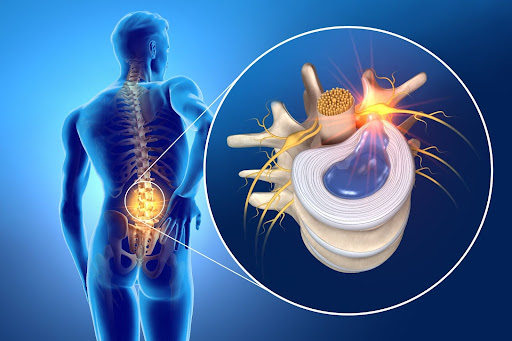
Your spine consists of vertebrae (bones) stacked on top of each other with cushioning discs between them. Each disc has a tough outer ring (annulus fibrosus) and a soft gel-like center (nucleus pulposus).
A herniated disc (also called a slipped or ruptured disc) occurs when the soft center pushes through a tear in the tougher exterior. It's similar to what happens when you squeeze a jelly donut too hard and the filling squirts out.
This condition most commonly affects the lumbar spine (lower back) and cervical spine (neck), though it can occur in the thoracic spine (mid-back) as well.
Herniated discs typically develop due to:
When a disc herniates, it can press directly on nearby nerves or release inflammatory proteins that irritate nerves—both scenarios lead to nerve compression (a pinched nerve).
The relationship between pinched nerves and herniated discs is similar to the relationship between a symptom and one of its potential causes. Here's how they connect:
This distinction matters because treating the underlying cause of nerve compression is key to long-term relief. At Pain Specialists of America, our physicians conduct thorough evaluations to determine whether your pinched nerve stems from a herniated disc or another cause, guiding our treatment recommendations.
While both conditions can cause similar symptoms, there are some differences that help us distinguish between them.
Pinched Nerve Symptoms:
Herniated Disc Symptoms:
Key Difference: The primary difference in symptoms is that herniated discs often cause both localized pain at the herniation site AND radiating symptoms along the nerve pathway, while a pinched nerve from other causes might only produce radiating symptoms without the focal spine pain.
For example, a herniated disc in the lower back typically causes both lower back pain AND sciatic pain down the leg. A pinched nerve from another cause might cause the leg pain without significant back pain.
Seeking proper diagnosis and treatment for pinched nerves and herniated discs offers numerous benefits:
At Pain Specialists of America, our comprehensive approach addresses both immediate pain relief and long-term functional improvement.
Treatment approaches for both conditions focus first on relieving pain and inflammation, then addressing the underlying cause. Here's how we approach treatment at our Central Texas pain centers:
Conservative Treatments (First-Line Approaches):
Interventional Treatments (When Conservative Options Aren't Enough):
You might benefit from seeing a pain specialist at Pain Specialists of America if:
Our physicians create individualized treatment plans based on your specific diagnosis, symptom pattern, medical history, and treatment goals.
Q: Can a pinched nerve heal on its own?
A: Yes, many pinched nerves resolve on their own with rest and time. However, if symptoms persist beyond a few weeks, professional treatment is recommended to prevent long-term nerve damage.
Q: How long does it take a herniated disc to heal?
A: Most herniated discs show significant improvement within 4-6 weeks with appropriate treatment. Complete healing may take 3-6 months depending on the severity and location of the herniation.
Q: Can you have a herniated disc without pain?
A: Yes. Studies show that many people have herniated discs visible on imaging but experience no symptoms. Pain typically occurs only when the herniation compresses or irritates nearby nerves.
Q: Are epidural steroid injections painful?
A: These injections are performed with local anesthetic and often cause only minimal discomfort. At Pain Specialists of America, we use advanced imaging guidance to ensure precise placement, maximizing effectiveness and comfort.
Q: Will I need surgery for my herniated disc?
A: The vast majority of patients with herniated discs improve without surgery. Studies show that only about 10% of people with herniated discs eventually require surgical intervention.
Q: Can physical therapy help with a pinched nerve?
A: Yes, physical therapy is highly effective for many patients with pinched nerves. Specialized exercises can improve posture, strengthen supporting muscles, and create more space for compressed nerves.
Q: What's the difference between a bulging disc and a herniated disc?
A: A bulging disc extends beyond its normal space but maintains its outer layer intact. A herniated disc has a tear in the outer layer, allowing inner disc material to leak out. Herniated discs are more likely to cause nerve compression symptoms.
At Pain Specialists of America, our team of fellowship-trained interventional pain physicians specializes in diagnosing and treating spine conditions with precision and compassion.
Our approach focuses on finding the root cause of your pain, then developing a comprehensive treatment plan that may include both advanced interventional procedures and supportive therapies. For every pain, we have a plan—and we're committed to helping you find your path back to a life with fewer limitations.
If you're struggling with symptoms that might indicate a pinched nerve or herniated disc, don't wait to seek help. Contact Pain Specialists of America today to schedule a consultation with our expert team.
This article was reviewed by the medical team at Pain Specialists of America, a physician-owned interventional pain management practice serving Central Texas since 2014. Our fellowship-trained pain specialists have extensive experience diagnosing and treating spine conditions including pinched nerves and herniated discs using the latest evidence-based approaches.