Adult stem cells are called undifferentiated cells, meaning that they can change to create other kinds of specialized cells. There are many different types of these stem cells within your body. Each kind of tissue in your body has a specific set of stem cells. This means that they can be taken from your own body from blood, bone marrow, skin, bone, skeletal muscle, teeth and other organs.
Because the cells are extracted from your own body, anything they are used to treat is specific to you. This means that it will not be rejected by your body. Basically, you can think of stem cells as the mother-cells which can build your entire body “from scratch”.
Although rapid progress is being made, stem cell treatment is still in its infancy. The implications of the kind of treatment, however, are massive and far-reaching. New breakthroughs in stem cell treatments are happening almost every day. For example, stem cells can be used to help repair the damage caused by accidents and chronic illnesses, such as injury to spines and spinal disks.
In the future, stem cells are likely to be used to grow new nerves and spinal tissue, as well as to help cure diabetes and help people recover from heart attacks. Right now, research is ongoing and beginning to be applied to re-growing spinal disks, repairing torn cartilage, to treat diseases like Alzheimer’s, and even re-growing your own natural teeth. Doctors are using carefully placed stem cells to help people heal faster and more completely.
Stem cell injections are also being used as a form on non-invasive therapies to help relieve chronic pain, such as that of long-term muscle and joint pain. They may be a viable treatment option for people with degenerative disks who are not ideal candidates for a more traditional therapy. Stem cell therapy can be used in conjunction with other treatments, such as surgery and platelet-rich plasma (PRP) injections. PRP is created from blood taken from the patient’s own body and used to speed healing and reduce inflammation.
At Pain Specialists of Austin, we understand pain and know how to work alongside you to give you the expert medical treatment you need, combined with the compassionate care you deserve. If you or someone you love suffers from chronic pain, or you would like to learn more about the latest advances in pain management or about stem cell therapy, please call (855) 876-7246 for an experienced pain management doctor in Austin. Or, if you would like, please use our convenient online appointment request form.
Combating Pain in the Forces: Challenges and Modern Management
As early as 2006, the military was beginning to see a link between increasing rates of soldier suicides and pain issues. The symptoms in soldiers with chronic pain were the same associated with Post Traumatic Stress Disorder (PTSD) and till today the most important challenge one faces as a Pain Specialist is “How can we really diagnose those very important issues if we didn’t have a good control of Pain?
Specialists now know, that pain itself “is a disease process” and that early recognition and management can prevent its progression into a devastating state whose seriousness has been equated by the Department of Health to chronic illnesses like Heart disease and Diabetes.
On an average more than half of the soldiers in their lifetime may have very likely suffered from blunt or penetrating trauma, extreme physical or extreme heat/cold conditions leading to a highly intertwined web of chronic pain and psychological disorders. Typically described as Anxiety and PTSD these have been a common coexistent with chronic pain. To blur the picture further a similar overlapping disorder known as DESNOS (Disorder after extreme stress not otherwise specified) is now getting wide recognition in the military and even their family members.
There is a lack of understanding as to why one would continue to have ongoing pain despite injuries that may have occurred years earlier during either warfare or otherwise. Patients often left with debilitating physical, psychological, and pain-related sequelae that can persist for many years after the initial event and often lead to severe impairment in many aspects of life.
Timely interventions coupled with physical and behavioral therapy may help postpone or eliminate the need for the removal or correction of structural abnormalities of the spine.
Here at the Pain Specialists of Austin (PSA) with the application of the knowledge of advanced clinical anatomy and an appreciation of the structural basis of spinal pain our Board Certified Physicians aim to revolutionize diagnostic techniques to identify cardinal sources of chronic spinal pain, particularly the discs and joints. Therapeutic techniques are then used in a stepwise logical sequence to isolate specific pain generators contributing to chronic spinal pain.
These techniques range from nerve blockade and nerve ablations to minimally invasive surgical procedures to curb the use of chronic medications and treat pain in a much healthier and promising way.
The recognition that disorders like PTSD and DESNOS often coexist with pain-related symptoms reinforces the need for multimodal, multispecialty treatment and rehabilitation programs. Our team of physicians use this unique treatment model: Bio-PsychoSocial model of rehabilitation – where multiple clinicians work hand in hand to discuss a realistic understanding of a soldier's pain problems, plan early interventions to achieve their short- and long-term goals for function and improve their quality of life.
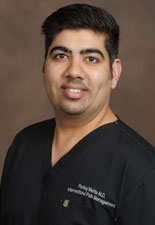
Pankaj Mehta MD
Interventional Pain Physician
Pain Specialists of Austin/Killeen
Ambulatory Surgery center Of Killeen